
Busy Isn’t Profitable: Why Financial Literacy Is the Missing Link for SME Survival
Small and medium-sized enterprises (SMEs) are the backbone of Bermuda's economy. They create jobs, serve local communities, innovate quickly, and keep the island economically diverse. Yet despite their importance, SMEs remain the most financially vulnerable segment of our business landscape.
The uncomfortable truth is this:
most SMEs don't fail because the idea was bad. They fail because the finances were misunderstood.
What SMEs Are — and Why They're Vulnerable
SMEs are typically owner-led businesses with limited staff, tight margins, and little room for error. The owner is often the salesperson, operations manager, bookkeeper, and strategist all at once. This concentration of responsibility makes SMEs agile but also exposed.
Unlike large corporations, SMEs:
- Have limited cash reserves
- Depend heavily on consistent cash flow
- Are more exposed to economic shocks
- Often lack in-house financial expertise
When uncertainty rises, SMEs feel it first and hardest.
The Current Economic Reality
Today's economic climate is defined by uncertainty:
- Rising costs (rent, utilities, payroll, imports)
- Shifting consumer behaviour
- Global instability affecting supply chains
- Tighter access to credit
- Increasing compliance and regulatory expectations
For SMEs, this environment magnifies existing weaknesses. Businesses that were "getting by" suddenly find themselves under pressure. And those that relied on instinct instead of insight are discovering that hard work alone is no longer enough.
The Number One Reason SMEs Fail
Ask ten business owners why SMEs fail and you'll hear a range of answers: competition, taxes, the economy, staffing. But when you strip it back, the most common root cause is remarkably consistent:
Poor financial literacy — particularly around cash flow.
Many SMEs generate revenue but still struggle to:
- Pay bills on time
- Cover payroll comfortably
- Absorb unexpected costs
- Plan beyond the next few months
A business can look successful from the outside and still be one slow-paying client or surprise expense away from crisis.
Two Businesses. Two Different Outcomes.
Consider two SME owners operating in similar markets. One regularly reviews her numbers, plans for slower months, prices her services to reflect true costs, and sets aside money for taxes. Her business isn't flashy, but it's stable. She sleeps better, makes confident decisions, and invests gradually in systems and staff.
The other is constantly busy. Sales are strong. But pricing hasn't changed in years, costs creep up unnoticed, taxes are dealt with "later," and the bank balance becomes the main decision-making tool. Stress grows. Cash runs tight. Eventually, the business downsizes or closes — not because demand disappeared, but because control did.
The difference between these two businesses isn't intelligence or effort.
It's financial literacy!
Why Financial Literacy Changes Everything
Financial literacy is not about becoming an accountant or drowning in spreadsheets. It's about understanding a few critical truths:
- Revenue is not profit
- Timing matters as much as totals
- Systems protect you when pressure rises
- Planning is a form of risk management
Financially literate SME owners don't eliminate risk, they anticipate it. They don't avoid problems, they see them early. And they don't rely on hope, they rely on information.
The Only Sustainable Path Forward
In an uncertain economy, there is no single policy, product, or funding programme that guarantees SME survival. But there is one skill that consistently separates businesses that endure from those that struggle:
Financial literacy.
It allows SMEs to:
- Adapt instead of react
- Make informed trade-offs
- Protect what they've built
- Grow at a pace their business can actually sustain
Most importantly, it restores something many SME owners quietly lose along the way: confidence.
The Conversation We Need to Have
If Bermuda wants a resilient SME sector, the conversation must move beyond "support" and into capability-building. Teaching SME owners how to read their numbers, understand their risks, and plan realistically is not a luxury, it is economic infrastructure.
Busy will never equal profitable.
And effort without insight will always carry unnecessary risk.
The future of SMEs belongs to those who understand not just what they do, but how their business truly works.
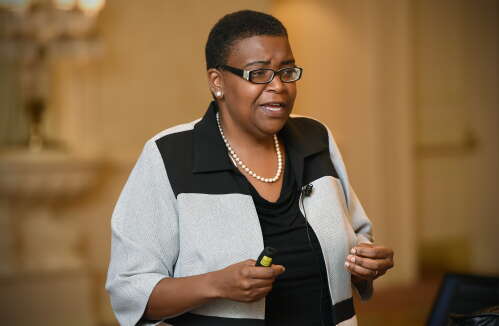
Claudette Fleming PhD is an ICS strategist. For more information contact her at: cfleming@icsbermuda.bm.